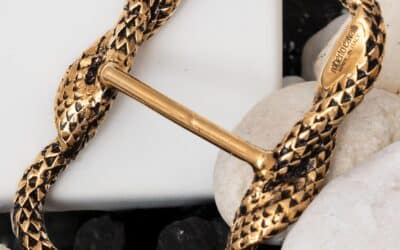
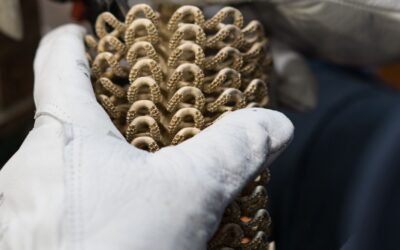
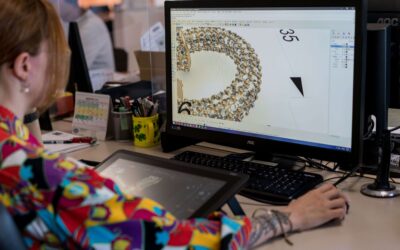
In the jewelry and high-end fashion accessories industry, jewelry prototyping is not just an intermediate step between an idea and production. It is a strategic product development phase used to assess aesthetics, proportions, technical feasibility, and consistency with the manufacturing process before moving forward with final production.
For brands, designers, and product development teams, reaching a reliable sample early means shortening decision cycles, reducing risk, and improving communication between creative direction and technical execution. In this sense, jewelry prototyping is not only about visualizing a design. It is about validating it, refining it, and preparing it for the next stage with greater control.
What jewelry prototyping is and why it has become central to product development
Jewelry prototyping is the process of turning a concept into a physical or technical sample that can be reviewed before production begins. Its value goes far beyond visual representation. A prototype makes it possible to assess geometry, volume, fine details, stone settings, connections, proportions, and the overall behavior of the design in a more realistic way.
In modern collection development, this phase has become increasingly important because it closes the gap between creative intent and manufacturing reality. Issues that used to emerge only in later stages can now be identified much earlier, when revisions are faster, less expensive, and far easier to manage.
Why a prototype is not just meant to “show” the piece
A well-developed prototype is not simply a visual preview. It is a verification tool that helps determine whether the design still works once it leaves the digital environment and becomes an actual object.
In jewelry and decorative metal components, this often means spotting issues that a sketch or rendering cannot fully reveal: wall thicknesses that are too thin, unbalanced volumes, overly delicate decorative details, or geometries that may create complications in later manufacturing stages.
The role of prototyping in capsule collections, custom projects, and new lines
Prototyping becomes especially important whenever the project involves a high level of customization or needs to be approved quickly by multiple stakeholders. This is often the case with capsule collections, private label projects, bespoke developments, and new product launches, where the sample becomes the technical and visual reference point for everyone involved.
That is why an effective prototyping workflow should never be isolated from the rest of product development. It needs to support design goals, quality expectations, and production constraints at the same time.
From concept to sample: the key stages of jewelry prototyping
A strong prototype does not result from execution alone. It depends on a structured workflow. The quality of the sample is directly influenced by the quality of the process behind it. The more clearly the transition from concept to validation is managed, the lower the risk of unnecessary revisions, misinterpretations, or inconsistencies between the original idea and the final outcome.
This is particularly true in jewelry, where tolerances are tight and even small variations in thickness, volume, or detail can significantly affect both appearance and manufacturability.
Initial brief and feasibility assessment
Every project starts from a different kind of input. It may be a sketch, a moodboard, a technical drawing, a rendering, or even an early concept that has not yet been fully defined. The first stage is to translate that input into a clear brief by defining the product’s intended use, design language, size constraints, materials, finish expectations, and the objective of the prototype.
When the project involves the development of custom luxury jewelry, this early-stage assessment becomes even more important. It helps determine whether the concept is already aligned with the expected result or whether it needs adjustments to improve stability, readability, or production readiness.
Technical drawing and CAD 3D modeling
Once the brief has been defined, the project moves into technical drawing and 3D modeling. At this stage, volumes, dimensions, thicknesses, stone seats, surfaces, connections, and decorative details are controlled with much greater precision.
Technical drawing and CAD 3D modeling are the real bridge between creativity and industrialization. They make it possible to work through fast iterations, correct the model in a controlled way, and build a digital file that is far closer to the expected final result.
Prototype creation
After the digital phase, the next step is the actual prototype. Depending on the goals of the project, the sample may be used mainly to evaluate visual impact, formal consistency, detail readability, or compatibility with later manufacturing steps.
The value of this phase lies not only in the prototype’s fidelity to the CAD file, but in its usefulness as a decision-making tool. An effective prototype should make the project easier to read, easier to evaluate physically, and easier to compare against the original concept.
Review, adjustments, and final validation
Once the prototype has been created, the most important stage begins: review. This is where the team can identify inconsistencies between what was imagined and what has actually been produced. In some cases, the changes are minor. In others, they may involve proportions, assembly points, decorative detail definition, or overall visual balance.
This is one of the biggest advantages of jewelry prototyping: it allows teams to correct earlier and more effectively. When the sample has been properly validated, the project is much better prepared for the next stage.
What a jewelry prototype actually helps verify
The real value of a prototype emerges in its role as a technical filter. A well-made sample reveals what often remains hidden at a theoretical level: whether volumes work, whether details remain legible, whether the general effect is consistent with the intended market positioning, and whether the design is compatible with the production process.
For companies developing premium jewelry or decorative components, this phase is a powerful risk-reduction tool. It helps verify not only aesthetics, but also the project’s behavior in a real manufacturing context.
Proportions, volumes, and wearability
A prototype helps assess the balance between solids and voids, the perception of volume, and the overall harmony of the piece. In rings, bracelets, and wearable items, it can also provide insights into comfort and fit.
Details, thicknesses, and geometries
Many projects look convincing at a conceptual level but reveal issues when they become physical objects. Thicknesses may be too light, transitions may be too sharp, and decorative details may be too fine to achieve the intended result efficiently in production.
Stone settings, assemblies, and visual impact
In more complex pieces, a prototype is also useful for checking stone seats, mechanical connections, closure logic, assembly points, and the overall visual impact of the finished design.
Consistency with final production
The most important check, however, concerns the relationship between the sample and the later production stage. A prototype should help determine whether the project can move forward consistently while maintaining perceived quality, precision, and technical reliability.
Technologies and processes used in jewelry prototyping
Modern prototyping is built on the integration of digital design tools and manufacturing knowledge. For that reason, talking about jewelry prototyping means discussing not only the 3D file itself, but also its ability to become a sample that is useful today and manufacturable tomorrow.
The point is not to list every available technology, but to understand how and when each one contributes to better precision, faster iteration cycles, and stronger alignment with the expected final result.
CAD 3D as the foundation of the workflow
CAD is the starting point of the entire process. It allows teams to build accurate models, control scale and proportions, and make revisions quickly and precisely. In jewelry development, CAD/CAM is now a structural part of the workflow because it connects design, simulation, and manufacturing more efficiently.
For a broader technical overview, the GIA resource on CAD/CAM in jewelry design is a useful non-commercial reference.
3D printing and resin prototypes
When the goal is to obtain a fast, readable, and accurate sample, 3D printing can be extremely effective. It is especially valuable for visual and geometric validation, fast revisions, and the assessment of fine detail in projects with a strong decorative component.
From a methodological perspective, ASTM’s framework on additive manufacturing standards provides a strong reference point for terminology, process control, and quality expectations.
Lost-wax casting and the connection to production
When the project needs to move toward a metal part, knowledge of the next manufacturing steps becomes essential. In this context, lost-wax casting plays a strategic role because it supports complex geometries, fine detail, and a smoother connection between prototype validation and final production.
When rapid metal prototyping becomes relevant
In some projects, especially when more advanced checks are needed on shape, detail, and part behavior, rapid metal prototyping also becomes relevant. In these cases, the advantage lies in shortening the time to validation while assessing the project in a way that is even closer to the final piece.
Why jewelry prototyping reduces time, cost, and errors
One of the main advantages of prototyping is that it moves quality control upstream. Correcting a file or a sample is less expensive, faster, and operationally easier than making changes once the project has already entered casting, finishing, or production.
From a project development perspective, this results in better efficiency across the entire workflow. It reduces unproductive iterations, improves the quality of decisions, and creates more precise communication between design, validation, and production.
Fewer errors before production starts
Prototyping helps identify issues with proportions, detail definition, and technical feasibility before they become costly rework. This is especially important in premium projects, where the acceptable margin for error is extremely small.
Faster iteration cycles
When the workflow is set up correctly, revisions become faster and easier to manage. This accelerates the transition from concept to validated sample and helps compress time to market.
Better control over perceived quality and feasibility
A prototype does not only improve technical precision. It also improves the team’s ability to judge perceived quality, meaning how the piece will actually be read by the client, the brand, or the design department once it is presented.
When it makes sense to use jewelry prototyping services
Not every project requires the same level of early-stage development, but there are situations where prototyping becomes almost essential. This is especially true when the design is new, highly customized, subject to approval by several stakeholders, or expected to move into production with a low tolerance for inconsistency.
For brands and designers, prototyping therefore becomes a strategic tool whenever the project needs to be evaluated quickly, presented to a client, or transferred to the next production step with greater confidence.
New collections and capsule launches
When launching a new line, the sample often becomes the first true meeting point between creative direction and technical feasibility.
Private label projects and third-party development
In third-party production workflows, the prototype becomes even more valuable as an alignment tool. In this respect, the logic behind bijoux manufacturing and third-party production is closely connected to the quality of the prototyping phase.
Sketches, early concepts, and redesigns of existing pieces
Even when the starting point is still an early concept, prototyping helps transform that idea into a technical object that can be reviewed, corrected, and developed more methodically.
Do you have a concept, a sketch, or a technical file that needs to be developed?
Micromet supports brands, designers, and manufacturers in feasibility assessment and in the creation of samples aligned with aesthetic, technical, and production requirements. Contact Micromet to discuss your project.
How to choose the right partner for jewelry prototyping
Choosing a prototyping partner does not simply mean finding someone who can generate a file or build a sample. The key question is different: can that partner interpret the project from a manufacturing perspective, anticipate critical issues, and turn the concept into a sample that is genuinely useful for validation?
For that reason, technical capability should always be evaluated together with the ability to understand the brief, collaborate with design teams, interpret production constraints, and deliver a sample that is not just visually appealing, but operationally reliable.
Technical expertise to assess
A reliable partner should be able to work with complex geometries, fine detail, critical thicknesses, transitions, and assembly systems without losing control over manufacturability.
Co-design capability and brief interpretation
The quality of the design relationship matters. A strong partner does not simply execute. It helps translate the concept into a more robust, clearer, and more production-ready solution.
Connection between prototype, finishing, and final production
The strength of an advanced workflow lies in the connection between the sample and what comes after it. A partner who understands how the part behaves through later manufacturing and finishing stages can build prototypes that are far more useful as decision-making tools.
Jewelry prototyping for brands and designers: the Micromet approach
In the premium segment, the quality of a prototype depends on the ability to combine aesthetics, technical precision, and production awareness. That is where prototyping becomes truly strategic: not a formality, but a phase that strengthens the project and reduces uncertainty in the next steps.
For Micromet, prototyping is part of a broader product development approach in which design, validation, and production dialogue work together as one process. The goal is not just to create a model, but to deliver a sample that is consistent with the concept, technically credible, and genuinely useful for brands, designers, and companies operating in jewelry, fashion accessories, and high-end decorative metal components.
Do you want to turn an idea into a sample ready for validation?
Micromet supports brands, design teams, and product developers from concept to prototyping and through the transition to production. Tell us about your project.
FAQ about jewelry prototyping
What is jewelry prototyping?
Jewelry prototyping is the process of turning a concept or digital model into a physical or technical sample used to assess aesthetics, proportions, details, and feasibility before final production.
What is the purpose of a jewelry prototype?
A prototype helps validate the design, identify issues early, improve communication between design and production, and reduce the risk of errors in later stages.
When should a prototype be created before production?
A prototype is especially useful when the project is new, customized, technically complex, or needs to be approved quickly by a client, brand, or design team before moving into production.
What technologies are used in jewelry prototyping?
The most common technologies include CAD 3D, 3D printing, resin prototypes, lost-wax casting, and, in some cases, rapid metal prototyping.
How do you choose a jewelry prototyping partner?
The right partner should be evaluated not only for sample-making capability, but also for technical feasibility assessment, design interpretation, and the ability to connect prototyping with final production.