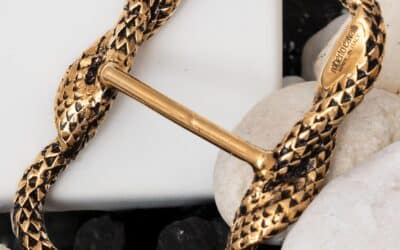
In leather goods and high-fashion accessories, metal hardware is not a secondary detail. It is a visible component that defines perceived quality, and often a functional part that carries load, moves repeatedly, or sits in high-friction areas. Over time, real-world exposure—abrasion, impact, humidity, perspiration, cosmetics, salt and pollutants—tests both the base material and the surface finish.
When hardware selection is misaligned with the product’s use case, issues rarely stay cosmetic. Finish wear on edges, colour drift across batches, excessive play on moving parts, or premature corrosion can trigger nonconformities, rework, delayed deliveries, and higher return rates. For product development and purchasing teams, this is why metal hardware should be treated as a design-and-industrialisation variable: a clear specification, validated samples, measurable aesthetic criteria, and repeatable production controls.
This article is designed for global fashion and leather goods professionals who need a practical framework to specify and select metal hardware—by type, material, finish durability, nickel-free requirements, and manufacturing process—while keeping the conversion journey anchored to Micromet’s core pages for manufacturing and capability.
To understand Micromet’s positioning at a glance (bags, footwear, leather goods, apparel, jewellery), see the English hub page.
For an overview of Micromet’s scope in metal hardware for bags, footwear and leather goods, see the dedicated page: metal hardware for bags, footwear and leather goods.
Why metal hardware is a critical quality lever in leather goods
Hardware affects product value in three ways.
First, it sets the tactile and visual benchmark. A buckle, snap hook, chain or logo plate is often the first element a customer notices and touches. Small defects—micro-scratches, uneven brightness, inconsistent tone—are amplified at close range.
Second, it must perform under load and movement. Handbag connectors carry weight; strap attachments absorb dynamic stress; footwear hardware flexes and gets hit; closures cycle thousands of times. A design that looks good but lacks mechanical stability will eventually show functional failure modes (deformation, loosened joints, weak springs, excessive play).
Third, it has to be repeatable across production batches. Many brands win or lose quality perception on consistency: the same finish tone across multiple components and colourways, the same feel of movement on closures, and stable aesthetics across seasonal replenishment.
A reliable selection framework therefore starts with function, moves to material and finish, and closes with process choice and quality control.
What fails first: finishes, moving parts, or load-bearing hardware?
In practice, early failures cluster in three hotspots:
- High-friction contact points: rings against clasps, chain links rubbing, hardware against leather edges, or metal-on-metal movement.
- Edge wear: corners and sharp radii are the first to lose finish and reveal substrate.
- Moving mechanisms: springs, swivels, and hinges can degrade if tolerances, surface conditions, or load assumptions are wrong.
The safest approach is to specify hardware using functional families and the product’s real exposure map, rather than relying on generic component names.
Metal hardware types: the 4 functional families to specify correctly
A useful professional classification groups metal hardware into four functional families. This helps align design, development, sourcing, and production on what matters most for performance and aesthetics.
- Closure and security hardware
Includes snap hooks, turn locks, magnetic systems, clasp closures, swivels, and safety mechanisms. Key priorities are controlled movement, consistent closure feel, minimal play, and long-term reliability across repeated cycles. - Load-bearing connectors
Includes D-rings, O-rings, strap attachments, handle anchors, chain connectors, and structural bridges. Priorities are tensile strength, resistance to permanent deformation, and stable geometry under dynamic loading. - Adjustment and sliding components
Includes buckles, strap adjusters, sliders, cord locks, zipper pullers, and guides. Priorities are smooth but controlled sliding, predictable friction, and stable surfaces in contact areas. - Reinforcement and decorative parts
Includes rivets, eyelets, studs, toe tips, logo plates, trims, and ornamental pieces. Priorities are surface quality, finish adhesion, edge integrity, and aesthetic repeatability.
This structure also clarifies what to validate during sampling: mechanical stability for load-bearing parts, cycle performance for closures, and finish durability for decorative components placed in abrasion-prone zones.
Materials that work: brass, zamak and stainless steel (when to choose what)
Material selection shapes four outcomes: aesthetics, structural performance, manufacturability, and how finishes behave over time. The right choice depends on geometry complexity, load conditions, friction exposure, and brand positioning.
Brass hardware: high-end aesthetics and clean detailing
Brass is widely used in premium leather goods hardware because it supports crisp detailing and a refined surface appearance. It performs well in design-driven components where the finish must look consistent and high-grade. The finish system must still be engineered to manage oxidation and colour stability in real usage conditions.
Zamak hardware: complex shapes and consistent styling at scale
Zamak alloys are often chosen when the design needs complex forms, textures, relief logos, or richer volumes. The material is well-suited for decorative and semi-structural components—provided the design manages wall thickness, radii, and stress distribution. For load-critical parts, geometry and assembly design become decisive.
Stainless steel hardware: strength and long-term stability for demanding use
Stainless steel is a strong option for high-stress components, harsh environments, and repetitive load cycles. It is frequently suitable for structural elements and for footwear contexts where abrasion, impacts, and environmental exposure are more aggressive.
Lightweight options: when aluminium makes sense
Aluminium can be relevant when weight reduction is a primary constraint—large decorative elements, chain concepts, or components where mass affects user experience. Surface protection and scratch resistance need careful planning, as aesthetics can degrade quickly in high-friction zones if the finish system is not aligned with real usage.
Material choice should always be paired with a finish plan and an exposure map. The same material can succeed or fail depending on contact points, edge geometry, and the coating system.
Finishes that last: how to avoid tarnishing, fading and edge wear
In fashion hardware, finishes are not only colour and shine. They are functional layers that protect substrate, improve resistance to corrosion and wear, and keep the hardware looking consistent across product life.
Two principles are especially important:
Finish consistency across batches requires a physical reference
A finish name alone is not enough. A master sample (approved reference) and measurable acceptance criteria reduce subjective evaluation and prevent drift across seasonal production. This matters most when a collection requires multiple components to match—buckles, rings, clasps, logo plates—often produced in different geometries.
Wear appears first where friction is predictable
Edge wear is not random: corners, sharp radii, and metal-on-metal interfaces are the first to show finish breakdown. For handbags, strap attachment points and chain interfaces are frequent wear zones. For footwear, repeated flexing and impacts create additional stress.
Where durability expectations are high, many programmes include a protective finishing strategy: plating system design plus a suitable protective layer to reduce abrasion marks and slow down tonal changes, especially on high-touch components.
Matching finish tone across different components
A common issue in high-fashion leather goods is tonal mismatch across components. Even slight variations in brightness or undertone can be visible when hardware is adjacent or repeated across a product family.
Professional control points include:
- defining finish targets by reference samples, not by name alone,
- controlling surface preparation before finishing,
- setting acceptance windows for colour and gloss consistency,
- aligning component designs so high-friction zones are protected by geometry as well as coating.
Nickel-free metal hardware: requirements, EU compliance and what nickel-free should mean
Nickel-free requirements are increasingly common in global fashion supply chains, especially when components may have prolonged contact with skin or when brands adopt strict internal policies for consumer safety and perceived quality.
In the EU context, REACH establishes a regulatory framework affecting substances used in products and articles, and it impacts many sectors beyond chemicals—clothing and consumer products included.
From a practical sourcing perspective, nickel-free should be treated as a specification topic, not a marketing label. A robust approach typically includes:
- defining the exact surfaces and components covered by the requirement,
- documenting the finishing system used to meet the requirement,
- aligning quality control checks with brand expectations and market requirements,
- validating that aesthetic targets remain stable under real exposure (wear, sweat, cosmetics, humidity).
This is one of the areas where early alignment between development, quality and manufacturing prevents downstream disputes and delays.
Manufacturing processes: lost-wax casting vs metal sintering and why it matters
In design-led hardware, manufacturing process is not a back-end choice. It directly impacts achievable geometry, surface detail, repeatability, sampling speed, and industrial scaling.
Lost-wax casting for detailed, design-driven hardware
Lost-wax casting is widely used for design-rich hardware where complex shapes, fine textures, and refined detailing are essential. It supports high visual quality and allows shapes that are difficult or inefficient with purely machined approaches, while still enabling repeatable production once the process is stabilised.
Metal sintering for rapid prototyping and pre-series validation
Metal sintering (including laser-based additive approaches such as Selective Laser Melting (SLM)) can be a strong accelerator when fast iteration is required. It is valuable in prototyping and pre-series stages to validate form, feel, assembly interfaces, and design intent before committing to production tooling. It reduces iteration loops and speeds up design decisions when time-to-market matters.
Design-to-production: reducing iterations and stabilising quality
Professional programmes benefit when design and manufacturing are connected early:
- geometry is reviewed for manufacturability,
- interfaces and tolerances are validated before scaling,
- finishing and durability risks are assessed against the product exposure map,
- sampling and pilot runs are used to lock repeatable outcomes.
For an overview of capabilities and the manufacturing scope, see Micromet’s page on custom small metal hardware manufacturing.
Application focus: what changes between handbags, footwear and leather goods
Metal hardware for handbags: structural parts and daily abrasion points
Handbags combine high perceived value with real structural demands. Many components are load-bearing: handle anchors, strap attachments, rings, bridges, snap hooks, chains, feet, locks, and closures. The customer interacts with these parts constantly, so movement quality and noise (play, rattling, inconsistent closure feel) matter as much as aesthetics.
Typical risk areas include:
- metal-on-metal wear at attachment points,
- edge wear on corners and high-contact surfaces,
- finish degradation where hardware rubs against leather edges or chain links.
For handbags, the most reliable outcome comes from matching component family to material choice, defining finish durability targets, and validating the high-friction exposure zones early.
Metal footwear hardware: flexing, impact and harsher environments
Footwear hardware experiences repeated flexing and impacts, plus more aggressive environmental exposure. Abrasion is frequent, and winter conditions in many markets introduce de-icing salts that can accelerate corrosion mechanisms when finishes and material choices are not aligned.
This makes specification discipline essential: geometry for durability, finishes designed for harsh exposure, and attention to edge integrity where rubbing and impacts are unavoidable.
Metal hardware for small leather goods: surface sensitivity and contact exposure
Small leather goods often involve high-touch usage and close visual inspection. Hardware components such as closures, small rings, logo plates and trims must maintain stable appearance and smooth surfaces. Where contact exposure is more direct, nickel-free requirements and finish stability become even more critical.
Luxury fashion jewellery hardware: micro-detail and refined finishing requirements
Luxury fashion jewellery places even higher expectations on surface quality and micro-detail. Textures, relief logos, fine edges and refined tones must remain stable through wear, handling, and storage. In this segment, a component that would be acceptable elsewhere can be rejected for small cosmetic imperfections.
Programmes tend to emphasise:
- surface integrity and finish cleanliness,
- stable colour and brightness across batches,
- repeatable detail reproduction,
- tight aesthetic acceptance criteria aligned with the brand.
Micromet’s positioning includes both high-fashion metal hardware and costume jewellery production, which supports mixed programmes spanning leather goods, footwear and luxury accessory lines.
Request a quote for custom metal hardware: what to send Micromet’s team
A fast, accurate quotation is easier when the input is structured for industrialisation. The most effective requests usually include:
- the application: handbags, footwear, belts, small leather goods, apparel, or jewellery,
- where the part sits on the product and how it is used (load, movement, friction zones),
- target quantities: samples, pre-series, seasonal volumes,
- target timeline for sampling and production,
- material preferences (if already defined) and finish targets with a physical reference sample when available,
- 2D drawings with key dimensions and tolerances; plus a 3D model when possible.
For 3D exchange, STEP (ISO 10303) is commonly used as a neutral CAD format for part and assembly data exchange across different CAD systems.
For technical evaluation, sampling or series production requests, use the dedicated form to contact Micromet’s team.