Metal accessories for clothing are not just decorative elements. In premium and luxury apparel, they affect product identity, perceived value, functionality, assembly compatibility and long-term consistency across collections.
At Micromet, we develop and manufacture custom metal accessories for clothing brands that require technical precision, aesthetic consistency and full control from concept development to production. We support design offices, product developers and production managers in the creation of metal trims and hardware for garments, combining 3D CAD development, prototyping, surface finishing and industrial manufacturing know-how.
Whether the project involves branded logo plates, eyelets, rivets, buckles, custom closures or decorative metal details, the objective remains the same: translate a creative concept into a production-ready component that performs both visually and technically.
Metal accessories for clothing: what fashion brands typically need
Fashion brands and apparel manufacturers usually require metal components that serve one or more of these functions: fastening, adjustment, reinforcement, decoration or brand recognition. In many cases, the same component must deliver both technical performance and a precise aesthetic result.
Typical requirements include:
- custom visual identity aligned with the collection
- compatibility with garment construction and fabrics
- controlled weight and dimensions
- consistent finishing across production batches
- feasibility from prototype to serial production
This is why clothing hardware should not be treated as a generic accessory category. Each metal part must be engineered in relation to the garment type, the intended use, the attachment method and the expected visual effect.
Types of metal parts for apparel production
Micromet develops a wide range of custom metal parts for clothing and premium apparel projects.
Buttons, snaps and rivets
These are among the most common functional metal components in garment construction. They are used in outerwear, denim, shirts, leather garments and structured fashion pieces where durability, closure performance and visual coherence are all relevant.
Eyelets, grommets and cord ends
Often used in sports-luxury, outerwear and fashion garments with lacing, drawstrings or technical detailing. These components require dimensional precision, proper edge finishing and compatibility with the textile structure.
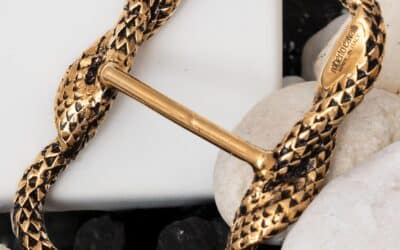
Buckles, sliders and adjusters
Used for belts integrated into garments, straps, cuffs, neck details and adjustable construction elements. In these cases, geometry, assembly tolerance and finish quality directly affect both function and design perception.
Logo plates, charms and branded metal details
These components are often developed to strengthen brand identity on jackets, coats, knitwear, dresses or capsule collections. They must combine visual sharpness, finish quality and correct attachment logic without compromising the garment.
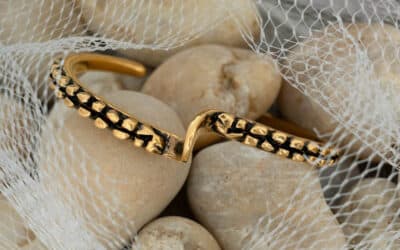
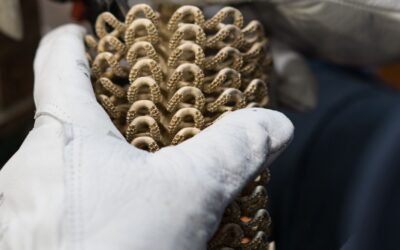
Chains, hooks and custom closures
More design-driven applications may include decorative chains, hook systems or custom closing elements. Here, the challenge is balancing styling intent with wearing comfort, weight control and production repeatability.
Materials and alloys for apparel hardware
Material selection is a technical decision, not only an aesthetic one. The correct metal depends on the function of the component, the target weight, the required finish, the attachment system and the positioning of the final product.
Brass
Brass is widely used for premium clothing accessories because of its machinability, visual quality and finishing versatility. It is suitable for components where both detail definition and perceived value are important.
Stainless steel
Stainless steel is relevant when higher corrosion resistance, structural stability or a more technical material profile is required. It can be used in selected applications where durability and clean aesthetics are priorities.
Aluminum and lightweight solutions
When low weight is critical, aluminum or other lightweight solutions may be considered. This is especially useful in garments where the metal detail must not compromise wearability or fabric behavior.
Material selection based on end use
In apparel applications, metal choice should always consider the garment category, the interaction with textiles or leather inserts, the expected mechanical stress, the finishing process and the balance between visual impact and comfort.
Surface finishing and visual consistency
In fashion clothing, finishing quality is often as important as the geometry of the component itself. Surface treatment determines the final visual identity of the part and contributes to its integration within the collection.
Micromet supports projects requiring polished, satin, brushed or custom decorative effects, as well as galvanic finishes for luxury fashion applications. The objective is not only to achieve the desired look, but also to ensure visual consistency, repeatability and coherence with the brand’s quality expectations.
Decorative and technical finishing requirements
Depending on the project, finishing may need to address color tone alignment with the collection, gloss or matte appearance, resistance to wear during handling and use, and consistency between prototype, sample and production batches.
Why finish control matters
For designers, finish is part of brand expression. For production teams, it is also a control issue. Variations in color, texture or surface quality can generate mismatch across batches and affect final product acceptance. For this reason, finishing should be managed as a controlled production variable, not as a final aesthetic afterthought.
From design brief to prototype and sample approval
The development of custom metal accessories for clothing should follow a structured workflow. A strong concept alone is not enough if the component cannot be industrialized correctly.
At Micromet, the process starts with technical assessment of the brief: intended application, dimensions, attachment method, visual target, material options and production feasibility. From there, 3D CAD development supports geometry definition and design validation before prototyping.
Prototyping allows brands and product teams to verify:
- proportions and visual balance
- functional behavior
- attachment compatibility
- finish effect on the actual component
- readiness for sample development or pre-production
This phase is particularly important in luxury and premium apparel, where even small hardware elements can strongly influence the overall perception of the garment.
Production requirements for custom clothing metal parts
Dimensional repeatability
Serial production requires stable dimensions and controlled tolerances, especially for closures, adjusters, eyelets and any component involved in assembly.
Assembly compatibility
Metal accessories must work with the selected fabrics, garment structure and sewing or fixing methods. A visually attractive component that creates assembly issues is not production-efficient.
Finish consistency and visual defect control
Luxury and premium brands expect consistency not only in form, but also in surface appearance. This includes control over scratches, irregular plating, chromatic variation and other visual non-conformities.
Prototype-to-production continuity
One of the most critical aspects in supplier selection is the ability to maintain coherence between approved sample and manufactured batch. This continuity is essential for avoiding rework, delays and quality disputes.
Why Micromet for custom metal accessories for clothing
Micromet operates as a technical partner for fashion brands looking for custom-made metal accessories with a strong balance between design sensitivity and industrial execution.
Our support covers:
- technical interpretation of the design brief
- 3D CAD development
- prototyping and validation
- material and finishing assessment
- industrial production of custom metal components
- quality-oriented approach throughout the process
For clothing brands, this means working with a supplier that understands both the aesthetic requirements of the fashion industry and the production constraints that affect feasibility, consistency and delivery quality. For a broader overview of Micromet’s positioning as a custom metal accessories manufacturer for fashion brands, you can explore our dedicated page.
Applications in premium and luxury apparel
Custom metal accessories can be developed for a wide variety of garment categories, including:
- jackets and coats
- trench coats and outerwear
- denim and casualwear
- dresses and structured garments
- knitwear with branded details
- leather and hybrid textile-leather garments
In each application, the component must be designed not only for appearance, but for integration into the product architecture of the garment.
Related applications across fashion accessories
Some projects share technical requirements with adjacent categories such as metal components for bags and metal accessories for footwear. When useful, Micromet can support development logic across multiple product lines while keeping each component aligned with its final application.
Request a technical consultation for your clothing hardware project
If you are developing a new apparel collection and need custom metal accessories for clothing, Micromet can support your team from concept definition to prototype development and production.
We work with fashion brands and product teams looking for:
- custom metal trims and hardware
- branded metal details
- production-ready prototypes
- consistent finishing quality
- a manufacturing partner with experience in premium and luxury applications
Contact Micromet to discuss your project requirements, technical constraints and development timeline.
FAQ
What types of metal accessories can be developed for clothing?
Custom clothing hardware can include buttons, rivets, eyelets, grommets, logo plates, buckles, sliders, decorative trims, chains, hooks and custom closures. The most suitable solution depends on the garment type, the desired aesthetic effect and the production requirements.
Which metals are commonly used for apparel hardware?
Brass, stainless steel and aluminum are among the most common options. Material choice depends on weight targets, finish requirements, structural needs, corrosion resistance and the visual positioning of the final product.
Can custom metal parts for clothing be prototyped before production?
Yes. Prototyping is a key step in validating geometry, finish, attachment compatibility and overall feasibility before sample approval and industrial production.
Why is surface finishing important in clothing metal accessories?
Surface finishing affects the final appearance of the component, brand perception, batch consistency and, in some cases, durability. In premium and luxury apparel, finish quality is often a decisive factor.
What should fashion brands evaluate when choosing a metal accessories manufacturer?
Brands should assess technical development capability, prototyping support, material and finishing expertise, production consistency, quality control processes and the supplier’s ability to translate creative direction into production-ready components.